
Coronary Microvascular Dysfunction (CMD)
Coronary Microvascular Dysfunction (CMD) Assessment in Tirunelveli
Your Heart’s Smallest Blood Vessels Matter.
Coronary Microvascular Dysfunction (CMD) is a condition in which the tiny blood vessels supplying blood to the heart muscle do not function properly. Even when the major coronary arteries appear normal, reduced blood flow through these small vessels can cause chest pain, breathlessness and other symptoms of reduced blood supply to the heart.
At Aruna Cardiac Care, Tirunelveli, we provide specialised evaluation for Coronary Microvascular Dysfunction to help identify abnormalities in the heart’s microcirculation and guide appropriate treatment.
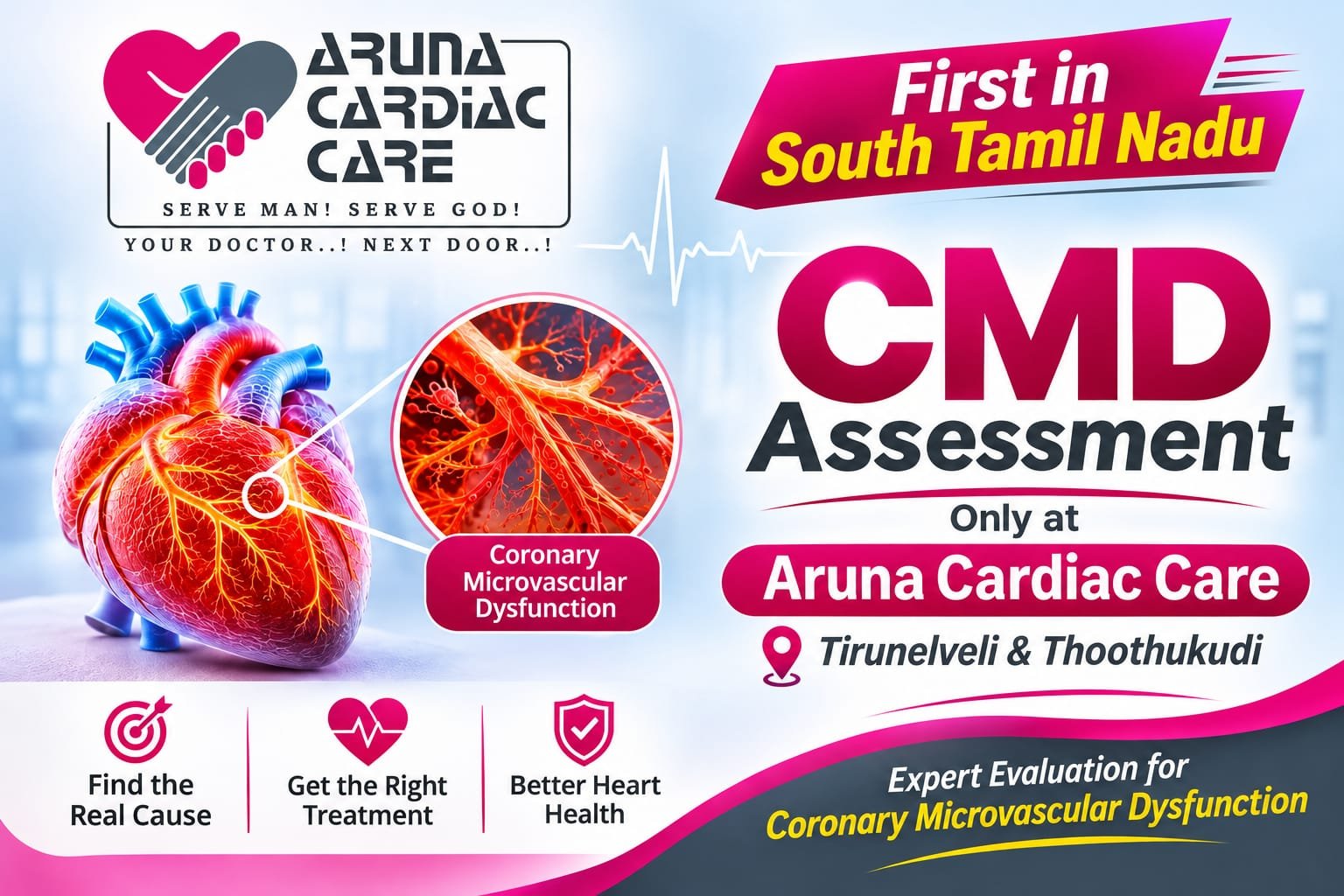
What Is Coronary Microvascular Dysfunction (CMD)?
The heart receives oxygen-rich blood through coronary arteries and their smaller branches, known as the coronary microvasculature.
In CMD, these small blood vessels may fail to dilate adequately or regulate blood flow normally. This can reduce oxygen supply to the heart muscle, particularly during physical activity or stress.
CMD can occur even when conventional coronary angiography does not show significant blockages in the major coronary arteries.
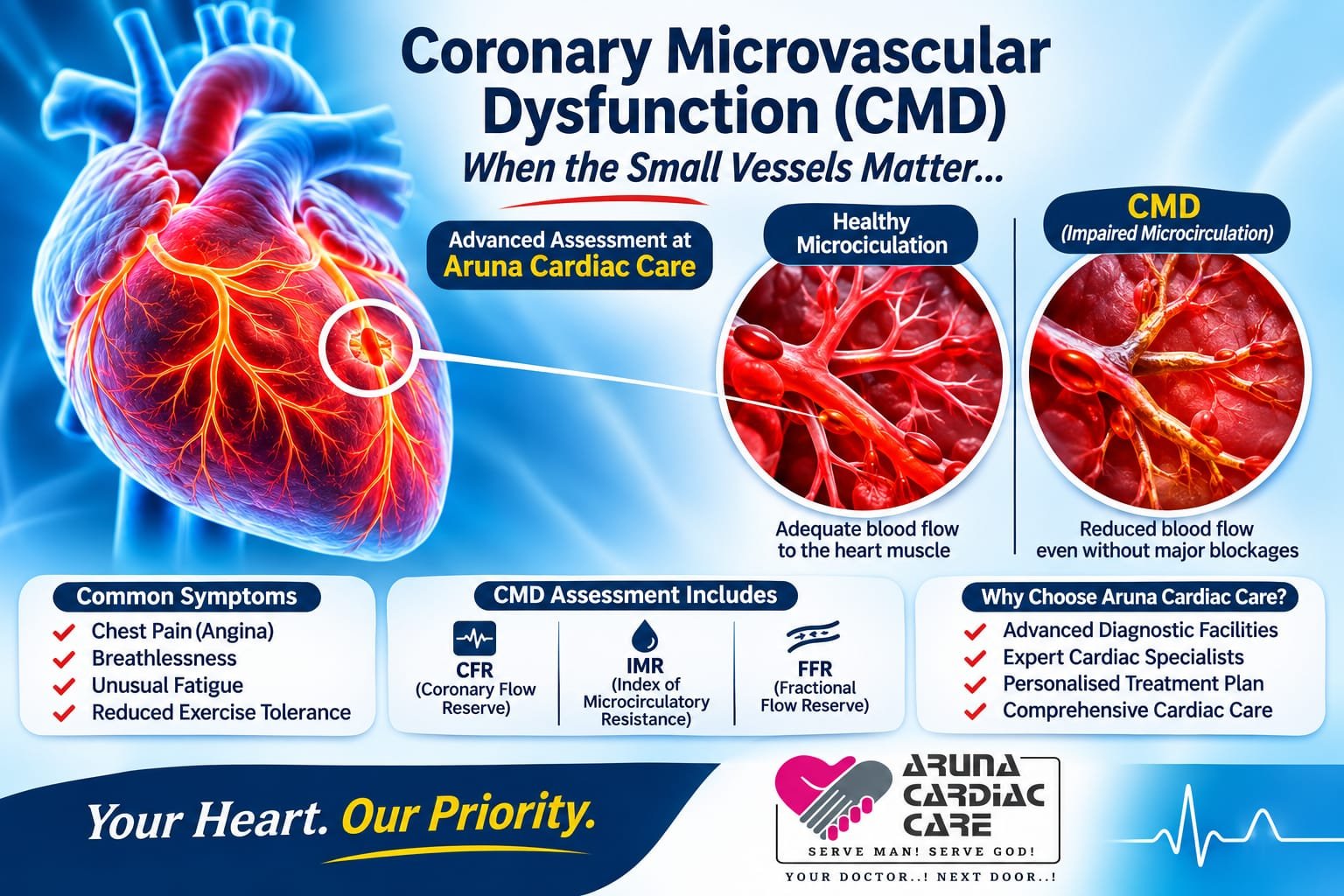
Common Symptoms of CMD
Watch out for these warning signs:
-
Chest pain or discomfort (Angina)
-
Breathlessness during physical activity
-
Unusual fatigue or tiredness
-
Chest discomfort during emotional stress
-
Reduced exercise tolerance
-
Chest pain even when resting
Symptoms can vary between individuals. A normal conventional angiogram does not always rule out CMD.
Who Should Consider a CMD Assessment?
CMD evaluation may be considered for people who:
-
-
Experience persistent chest pain despite normal or non-obstructive coronary angiography.
-
Have symptoms suggestive of reduced blood supply to the heart.
-
Experience unexplained breathlessness or exercise intolerance.
-
Have suspected microvascular angina.
-
Have ongoing cardiac symptoms despite treatment for conventional coronary artery disease.
-
How Is CMD Assessed?
CMD assessment involves specialised tests to evaluate the function of the coronary microcirculation.
Depending on the patient’s condition and clinical requirements, assessment may include:
1. Coronary Flow Reserve (CFR)
Evaluates the ability of coronary blood flow to increase when the heart requires more oxygen.
2. Index of Microcirculatory Resistance (IMR)
Measures resistance within the coronary microcirculation and helps identify abnormalities in small blood vessel function.
3. Fractional Flow Reserve (FFR)
Helps assess whether an intermediate narrowing in a major coronary artery significantly restricts blood flow.
4. Coronary Vasoreactivity Testing
In selected patients, specialised testing may help identify abnormal constriction or spasm of coronary blood vessels.
The appropriate tests are selected by the treating cardiologist.
Why Is Early CMD Diagnosis Important?
Identifying CMD can help:
-
Understand unexplained chest pain.
-
Identify abnormalities in coronary microcirculation.
-
Guide personalised treatment decisions.
-
Improve symptom management.
-
Support appropriate long-term cardiac care.
CMD Treatment and Management
Treatment depends on the underlying cause, symptoms and test results.
Management may include:
-
Individualised cardiac medications.
-
Blood pressure and cholesterol management.
-
Diabetes management.
-
Regular physical activity as medically advised.
-
Heart-healthy dietary habits.
-
Smoking cessation.
-
Regular cardiology follow-up.
There is no single treatment suitable for every CMD patient.
Why Choose Aruna Cardiac Care?
-
Specialised cardiac evaluation.
-
Advanced coronary diagnostic facilities.
-
Comprehensive assessment of unexplained chest pain.
-
Individualised treatment planning.
-
Experienced cardiac care team.
-
Dedicated cardiac care services in South Tamil Nadu.
Contact Us
For more information or to schedule an angiogram, please contact us at +91 9487 66 55 77 . Our team is here to provide you with the highest level of care and support.
Frequently Asked Questions About CMD
1. What is CMD in cardiology?
CMD stands for Coronary Microvascular Dysfunction. It affects the tiny blood vessels that supply oxygen-rich blood to the heart muscle.
2. Can CMD occur when an angiogram is normal?
Yes. Conventional coronary angiography mainly visualises larger coronary arteries and may not detect abnormalities in the smaller blood vessels.
3. Is CMD a serious condition?
CMD can affect quality of life and is associated with increased cardiovascular risk. Proper evaluation and management are important.
4. Can CMD be treated?
Yes. Treatment can help manage symptoms and address associated risk factors. The treatment plan depends on the individual patient’s condition.
5. Who needs a CMD assessment?
Patients with persistent chest pain, unexplained breathlessness or suspected microvascular angina may benefit from specialist evaluation.
6. Is CMD more common in women?
CMD and microvascular angina are particularly recognised among women with chest pain and no significant obstructive coronary artery disease. However, CMD can affect both men and women.
Get Your Heart’s Small Blood Vessels Evaluated
Persistent chest pain should never be ignored, even if your conventional angiogram appears normal.
Consult the cardiac specialists at Aruna Cardiac Care for an appropriate evaluation and personalised cardiac care.
ARUNA CARDIAC CARE
Your Heart. Our Priority.
Tirunelveli | South Tamil Nadu
Contact us to book your cardiology consultation.